Columbia University Film Screening: Living Sanctuaries (2025)
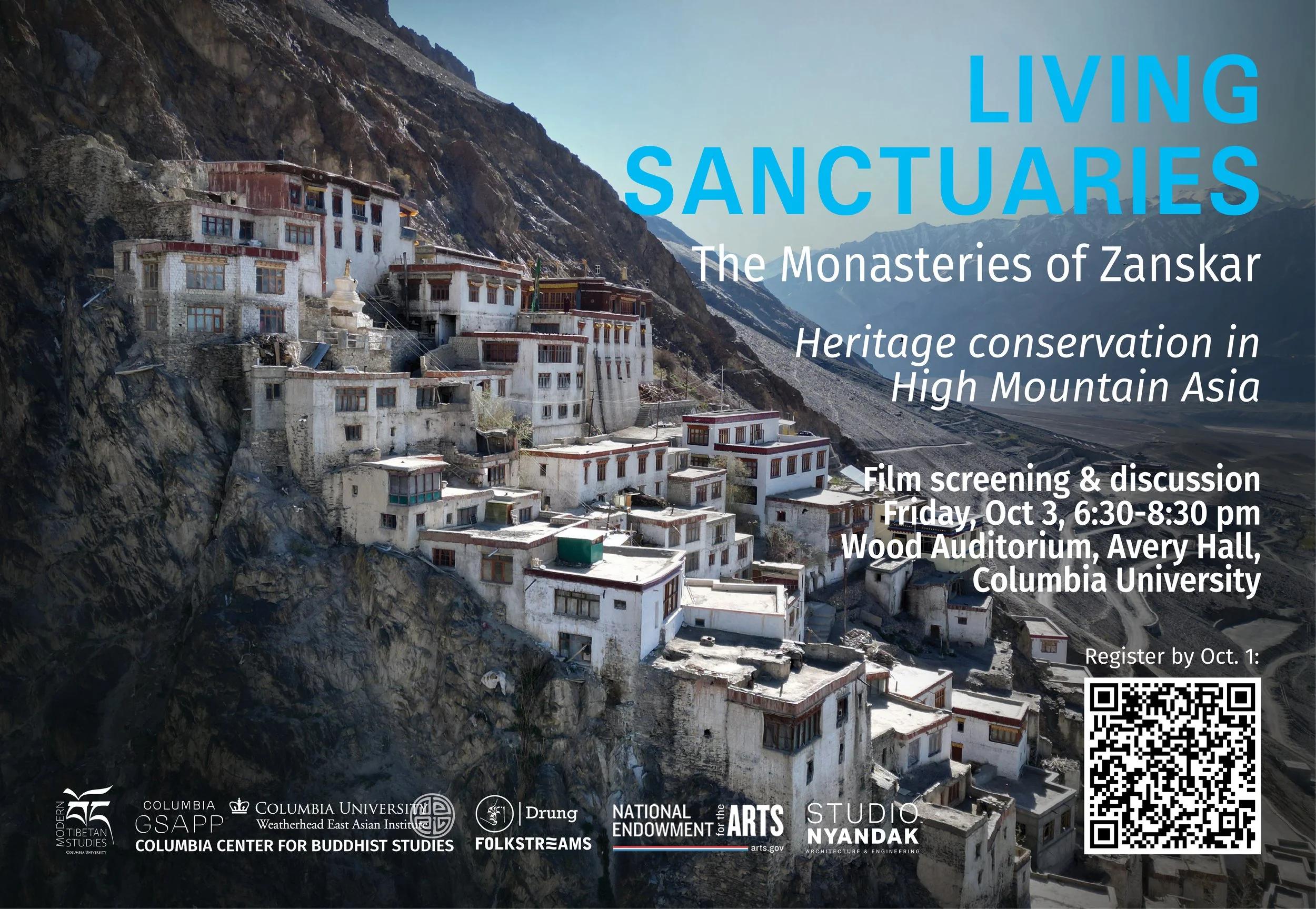
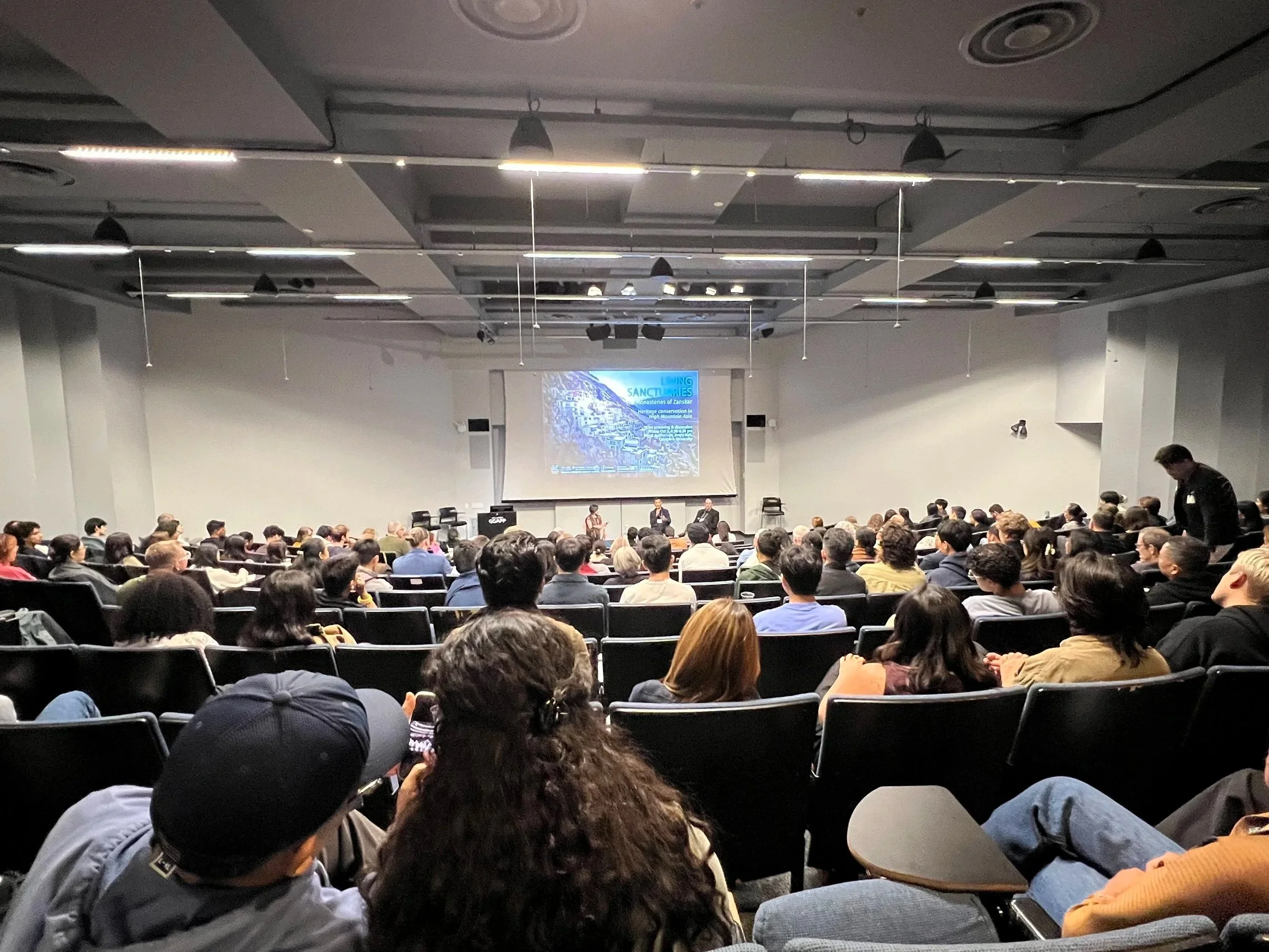
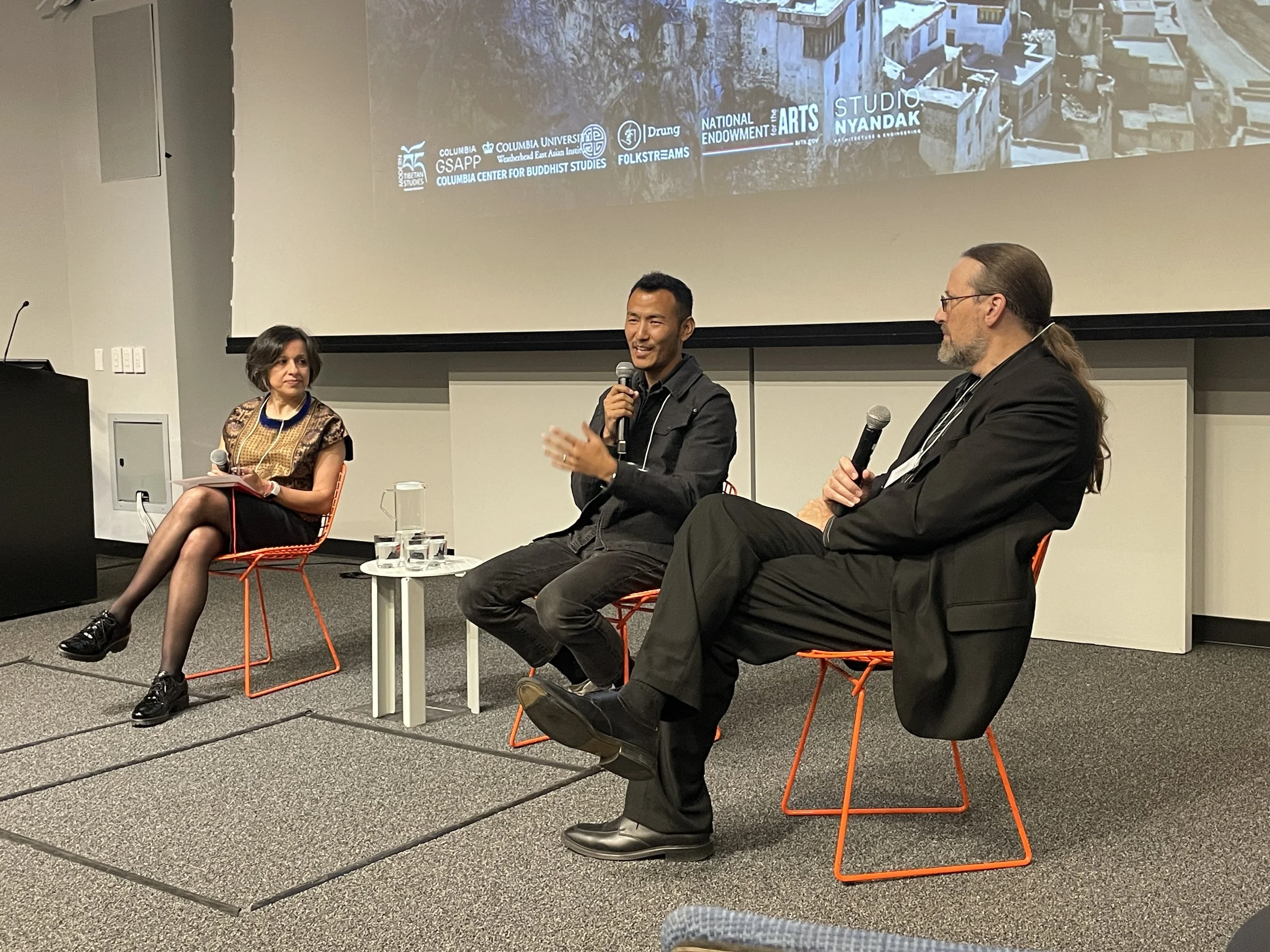
An early screening of Living Sanctuaries: the Buddhist Monasteries of Zanskar, a documentary on our ongoing fieldwork in the Western Himalaya, was held at Columbia University on October 3rd, 2025. It was followed by a discussion featuring Prof. Gray Tuttle (Professor and Chair, East Asian and Languages and Cultures, Columbia University), Sonal Beri (Associate Professor at GSAPP), and Tenzin Nyandak (Founding Principal, Studio Nyandak).
The event was hosted in collaboration with Columbia University’s Graduate School of Architecture, Planning, and Preservation (GSAPP) and Modern Tibet Studies Program, and drew over 170 attendees.
Please see a short description of Living Sanctuaries below, and continue to check our News page for updates on future screenings in NYC and elsewhere:
Living Sanctuaries: The Monasteries of Zanskar (2025)
Directed by Tenzin Tsetan Choklay at Drung Tibetan Film Collective.
High in the Western Himalaya, the Zanskar Valley is home to a remarkable architectural tradition shaped by centuries of Buddhist practice, extreme climate, and geographic isolation. At elevations nearing 13,000 feet, its monasteries and nunneries are not only places of worship but living records of Tibetan and Himalayan craftsmanship—built from earth and stone, adorned with vibrant murals and intricately carved woodwork.
Living Sanctuaries follows Studio Nyandak—an architecture and engineering firm based in New York City and Dharamshala—as they undertake a research expedition to document these structures and engage with the people who sustain them. Working in partnership with scholars and local community members, the team conducts architectural surveys, oral history interviews, and site assessments to better understand both the resilience and the vulnerability of Zanskar’s built heritage.
At a time when the region faces mounting pressures from seismic risk, climate change, and shifting demographics, Living Sanctuaries explores the cultural and environmental significance of these sacred sites. The film weaves together fieldwork, reflection, and local voices to illuminate the complexities of preservation in a landscape where history, devotion, and architecture remain deeply intertwined.